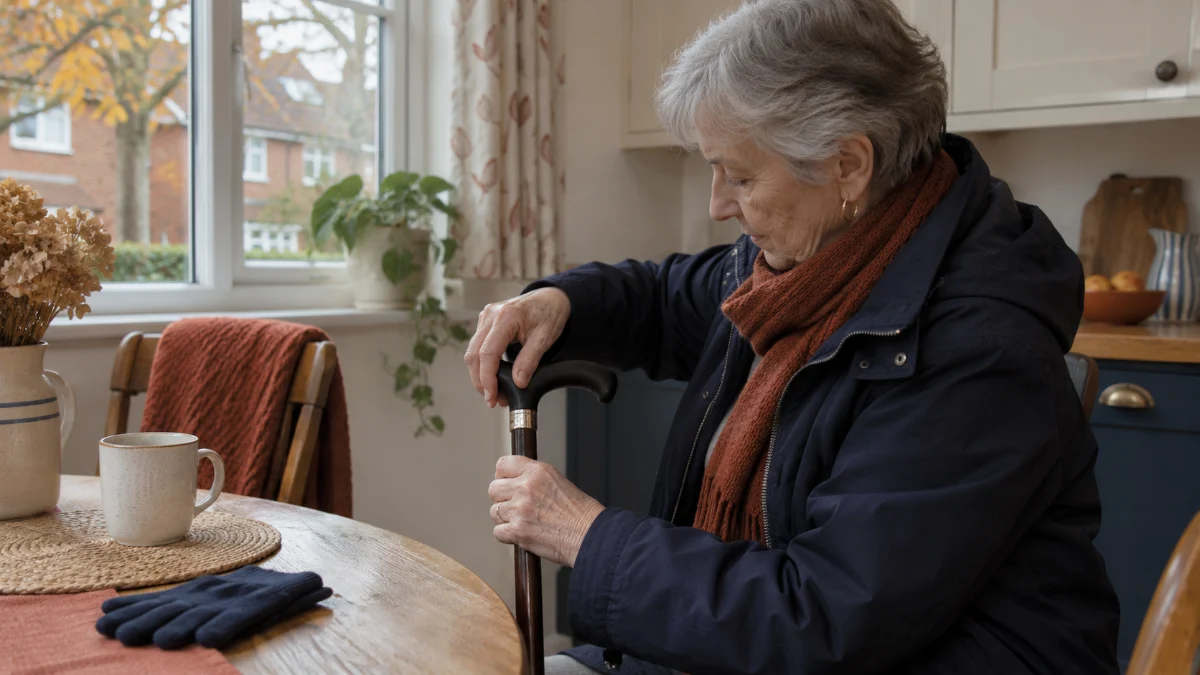
For someone referred to a hospital specialist because of a painful hip or knee, the NHS measures the wait from referral to the start of treatment. The latest figures show progress against the NHS’s 18-week measure for this kind of care. They also show that more referrals had been open for over a year.
Conservative MP Simon Hoare asked about the waiting list for trauma and orthopaedics, the NHS specialty that treats bone, joint and muscle problems. In a written reply on 23 November, health minister Karin Smyth said that 61.4% of cases were within 18 weeks, an improvement even as the waiting list grew.
What the 18-week figure leaves out
Daylight Post compared NHS England’s figures for the end of April and the end of September 2026. The share within 18 weeks rose from 59.0% to 61.4%. About 15,500 fewer cases were past 18 weeks. Within that group, the number of recorded waits of more than 52 weeks went up by 2,929.
| Cases still waiting | End of April | End of September |
|---|---|---|
| On the waiting list | 819,951 | 830,089 |
| More than 18 weeks | 335,967 | 320,478 |
| More than 52 weeks | 16,840 | 19,769 |
The longest waits can rise even as the wider picture improves. As more cases fall within 18 weeks, there can still be a growing group at the other end of the list. The figures track cases, and one person can have more than one referral. The specialty figures count waits reported to NHS England. Some hospital trusts did not submit data.
What this means for a hip or knee referral
The September figures tell us how long cases still on the list had waited at that point. Bone and joint care covers a range of treatments, so the figures give a picture of the whole service. Someone waiting for a particular operation, such as a hip or knee replacement, needs figures specific to that procedure and hospital.
What starts the waiting clock matters when interpreting any NHS target. We have also looked at when the clock starts for mental health care in A&E, where the measure begins when staff ask the specialist team to see a patient.
Across planned NHS care in England, the goal is for 70% of cases to be within 18 weeks by March 2027. That measure can show whether more patients are inside the target. Counting cases still open after a year shows whether the longest waits are also getting less common.