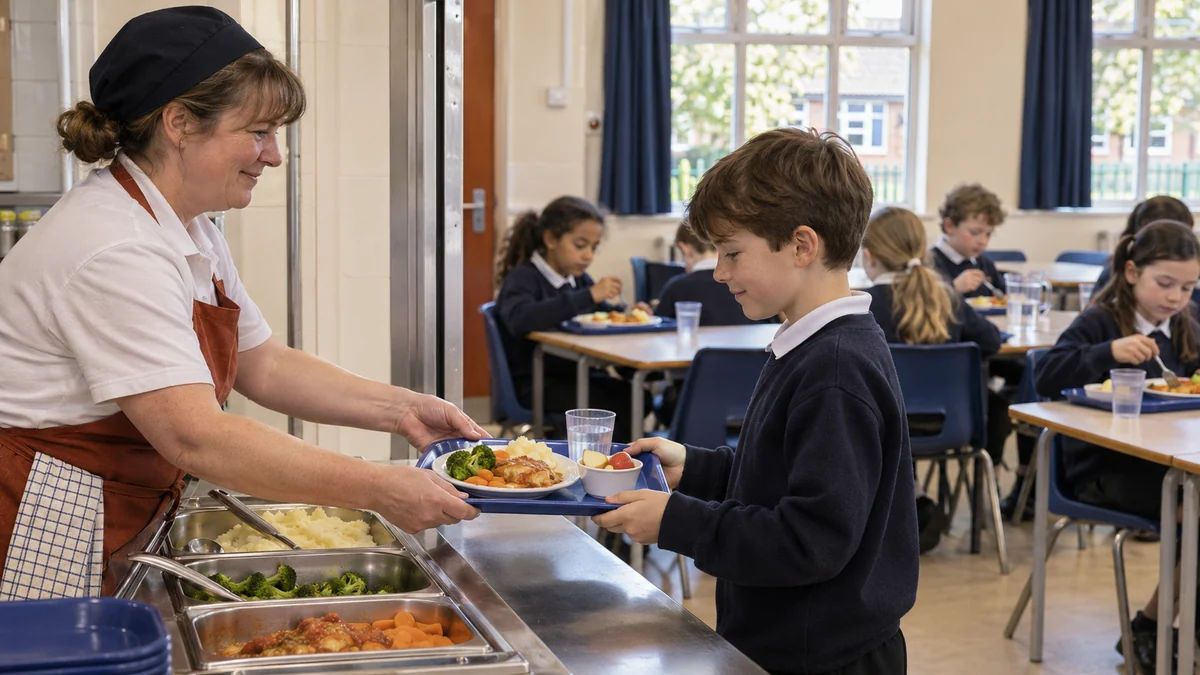
Since September, pupils in England can qualify for a free school lunch if their household receives Universal Credit, a benefit that helps people on low incomes pay for everyday costs. The government estimates that the change made more than half a million additional children eligible.
The Department for Education was asked in Parliament how many children would still be ineligible after the expansion. Its written answer on 18 November gave the estimate of children gaining access, but did not say how many remained outside the school meals scheme.
Daylight Post compared the school meals rules with the rules for England’s Holiday Activities and Food programme, which pays for holiday clubs that offer activities and food. The comparison shows where the expansion stops. The old £7,400 earnings limit still applies to the main route into the holiday programme for families on Universal Credit.
How one child can qualify for lunch and miss out on a club
Take a family receiving Universal Credit that earns £8,000 a year after tax, with benefits left out of that figure. Its school-age child can now qualify for a free school lunch even though the family earns more than £7,400. Those same earnings would still put the child outside the main route to a free place at one of the holiday clubs.
That matters when schools close for Christmas. A family that no longer pays for school lunches could still have to find money for both meals and childcare during the break.
Some children could also lose access they previously had. Until the end of the last school year, temporary protections allowed some pupils to keep their free school meals when their circumstances changed. Those protections have ended. A child whose family is now above the earnings limit can keep getting a school lunch under the wider rules if the household still receives Universal Credit, while losing their usual route into the holiday programme.
Councils can offer some extra places
Councils can use part of their grant to give free or cheaper places to other school-age children they think would benefit. The department expects them to use up to 15% of their grant this way. Each council decides how much to use and which children to offer those places to.
When will we know how many children have taken up the lunches?
In another answer on 18 November, the department was asked how many eligible pupils had received free school meals in each council area since September. It pointed to its annual school figures and said the figures for this school year would be published in June 2027.
Those figures will help show how widely schools are reaching pupils with the expanded offer. The rules already show why any rise in the number getting lunch in term time cannot be read as a rise in the number entitled to a free club place when school closes.