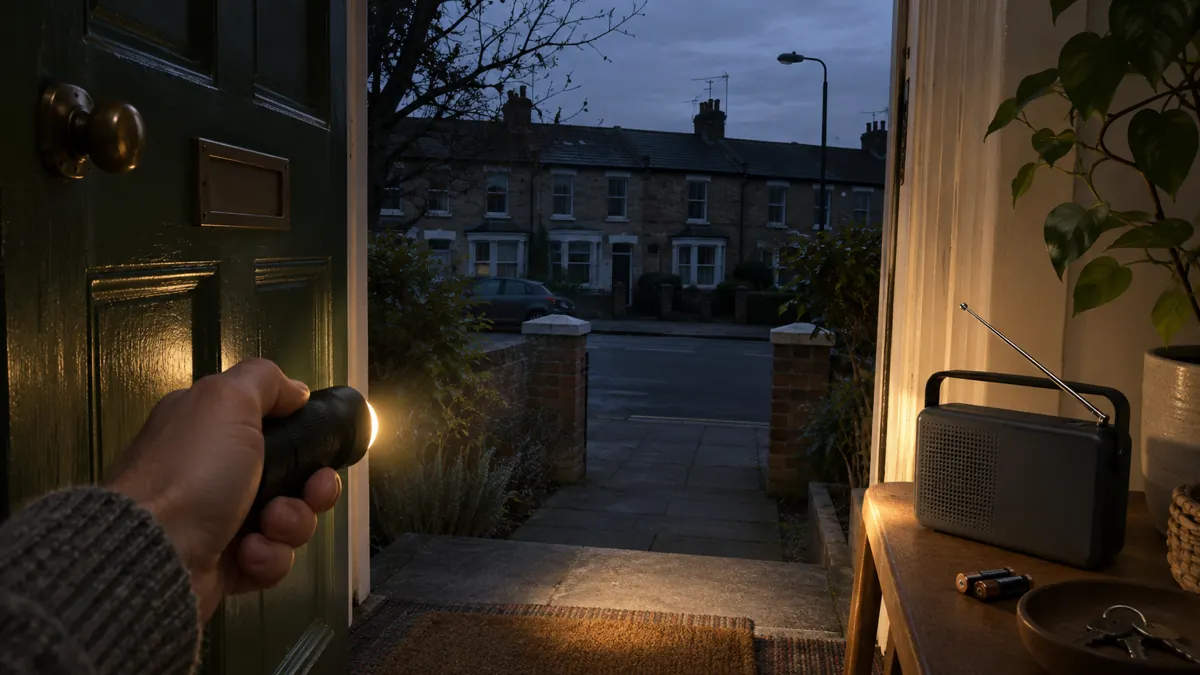
Keeping three days of food, water and other essentials does not mean the electricity will be back before those supplies run out. Britain’s household emergency advice and its power recovery target cover different things.
The government’s Be Ready campaign asks UK households to prepare for three days of disruption to everyday services. The electricity standard calls for arrangements capable of restoring all demand in Great Britain within five days after a major system failure.
The two public plans leave a practical question for someone who relies on electrically powered medical equipment at home. What help is available while their own part of the network is still down?
What each timescale means
The Cabinet Office, the government department coordinating the campaign, launched Be Ready on 22 October. Its advice covers disruptions to water, phones and the internet as well as electricity. The three days describe how long households are encouraged to prepare for.
The power standard is a requirement for the National Energy System Operator, known as NESO, which runs Great Britain’s electricity system. It concerns the ability to restart and rebuild supply after a major failure. Great Britain means England, Scotland and Wales; Northern Ireland is outside this particular standard, although it is part of the UK.
| Time | What it means |
|---|---|
| Three days | Disruption UK households are encouraged to prepare for |
| 24 hours | Capability to restore 60% of electricity demand in each region of Great Britain |
| Five days | Capability to restore all electricity demand across Great Britain |
NESO must have the required capability and arrangements in place by 31 December 2026. That deadline is still ahead. These are planning standards, rather than a prediction that a blackout is about to happen. They do not give each home its own guaranteed reconnection time.
Not everyone can stock up or wait
Buying extra food costs money. Storing it takes space. For someone whose medical equipment needs electricity, a full cupboard also cannot replace a working power supply.
The campaign asks people who can prepare to do so, allowing emergency services to concentrate on those needing more help. The Cabinet Office says it worked with groups supporting people in insecure housing and people using foodbanks. Some suggested steps are free, and others are intended to cost little.
One route to extra help is the Priority Services Register, a free service offered through energy suppliers and network operators. Ofgem, the energy regulator, says eligible people can receive priority support during emergencies and advance notice of planned power cuts wherever possible. People using electrical medical equipment can qualify.
One example comes from electricity network operator SSEN Distribution. It says 28 customers who relied on powered medical equipment tried a battery pack over six months. It offers batteries to some customers on its priority register after assessing their needs and how often power cuts affect their area. Whether a battery can power a particular medical device depends on the equipment manufacturer’s approval. The pack supplies power for a limited time.
That example shows one way a network can help before supply returns. The register does not promise a battery or a fixed reconnection time, and the national recovery target measures the restoration of demand across the system. Neither figure tells someone how long backup power would last in their home.